

Many families assume that English-taught medical programs in Europe are a soft alternative to US or UK medical schools, a fallback for students who couldn't get in elsewhere. That assumption is wrong, and it costs students real opportunities. These programs are rigorous, internationally recognized, and increasingly competitive. Significant effort and commitment are required for success, just like any top-tier medical pathway. This guide cuts through the noise, giving you clear facts, honest trade-offs, and practical steps to decide whether studying medicine in English in Europe is the right move for you.
Table of Contents
- Understanding English-taught medical programs in Europe
- Key benefits and opportunities for international students
- Challenges, adaptation, and career implications
- Practical application: Choosing and succeeding in an English-taught medical program
- Next steps: Explore guidance through Vistara Abroad
- Frequently asked questions
Key Takeaways
| Point | Details |
|---|---|
| Not just a backup | Success in English-taught medical programs requires commitment and adaptation to local requirements. |
| Affordable, accredited options | Many European programs deliver internationally recognized medical degrees at lower cost. |
| Prepare for challenges | Students should anticipate language barriers and tough competition for residencies. |
| Strategic program selection | Careful research and planning help maximize chances for academic and career success. |
Understanding English-taught medical programs in Europe
An English-taught medical program is exactly what it sounds like: a full medical degree delivered in English at a European university. But the details matter. These are not watered-down programs designed for students who couldn't handle local language instruction. They are structured, accredited degrees that follow the same curriculum standards as their locally taught counterparts.
Most programs run for five to six years and include both preclinical and clinical phases. The preclinical years cover foundational sciences like anatomy, physiology, and biochemistry. Clinical years involve rotations in hospitals and clinics, where you work directly with patients. This is where local language skills become important, even if your lectures are in English.
Accredited pathways for international students exist across a wide range of European countries, including Poland, Hungary, Czech Republic, Romania, Bulgaria, and the Baltic states. Each country has its own regulatory body overseeing medical education, so accreditation standards vary. Before applying, always check whether the program is listed in the World Directory of Medical Schools (WDOMS), which is the global reference used by licensing bodies.
For a detailed examination of requirements for English-taught medical pathways, it helps to look at each country's specific entry criteria, since some require entrance exams while others rely on high school grades and interviews.
Key structural features of these programs include:
- Instruction language: English for all lectures, exams, and coursework
- Clinical rotations: Often conducted in the local language environment
- Duration: Typically five to six years, leading to an MD or equivalent
- Accreditation: Must be verified through WDOMS and national medical councils
- Entry requirements: Vary by country, ranging from biology and chemistry prerequisites to entrance exams
Key benefits and opportunities for international students
The financial case for studying medicine in Europe is compelling. US medical school tuition averages over $200,000 for the full program, not counting living expenses. Many European English-taught programs cost between $10,000 and $20,000 per year in tuition, with living costs in cities like Krakow, Debrecen, or Olomouc running significantly lower than New York or London.
| Factor | US/UK medical school | European English-taught program |
|---|---|---|
| Average annual tuition | $50,000 to $70,000 | $10,000 to $20,000 |
| Living costs per year | $20,000 to $35,000 | $6,000 to $12,000 |
| Program length | 4 years (post-grad) | 5 to 6 years (undergraduate) |
| Language of instruction | English | English |
| Clinical exposure start | Year 3 to 4 | Year 3 to 4 |
Affordable and globally recognized education is one of the strongest draws for international students. Beyond cost, these programs offer genuine flexibility. Many accept students directly from high school, bypassing the four-year undergraduate degree required in the US. That means you could be a licensed physician years earlier.
Other major advantages include:
- Early clinical exposure: Some programs introduce patient contact as early as year two
- Global mobility: Graduates can pursue licensing in the EU, US (via USMLE), UK (via PLAB), and many other countries
- Diverse student body: You study alongside peers from dozens of countries, building an international professional network
- Merit-based admissions: Many programs prioritize academic performance over legacy or extracurricular packaging
Statistic to know: Some European medical universities report international student enrollment rates above 40%, reflecting genuine global demand for these programs.
Challenges, adaptation, and career implications
Here is the honest part. English-taught programs are not without real obstacles, and going in unprepared is a common mistake.
"Success hinges on performance, local adaptation, and addressing stigma for international medical graduates." This is not a warning to discourage you. It is a framework for what to prioritize from day one.
The biggest practical challenge is language. Your lectures are in English, but your patients speak Polish, Hungarian, Czech, or Romanian. Clinical rotations require you to communicate with patients and medical staff in the local language. Students who invest in language learning early, ideally before arriving, have a measurable advantage in clinical settings.
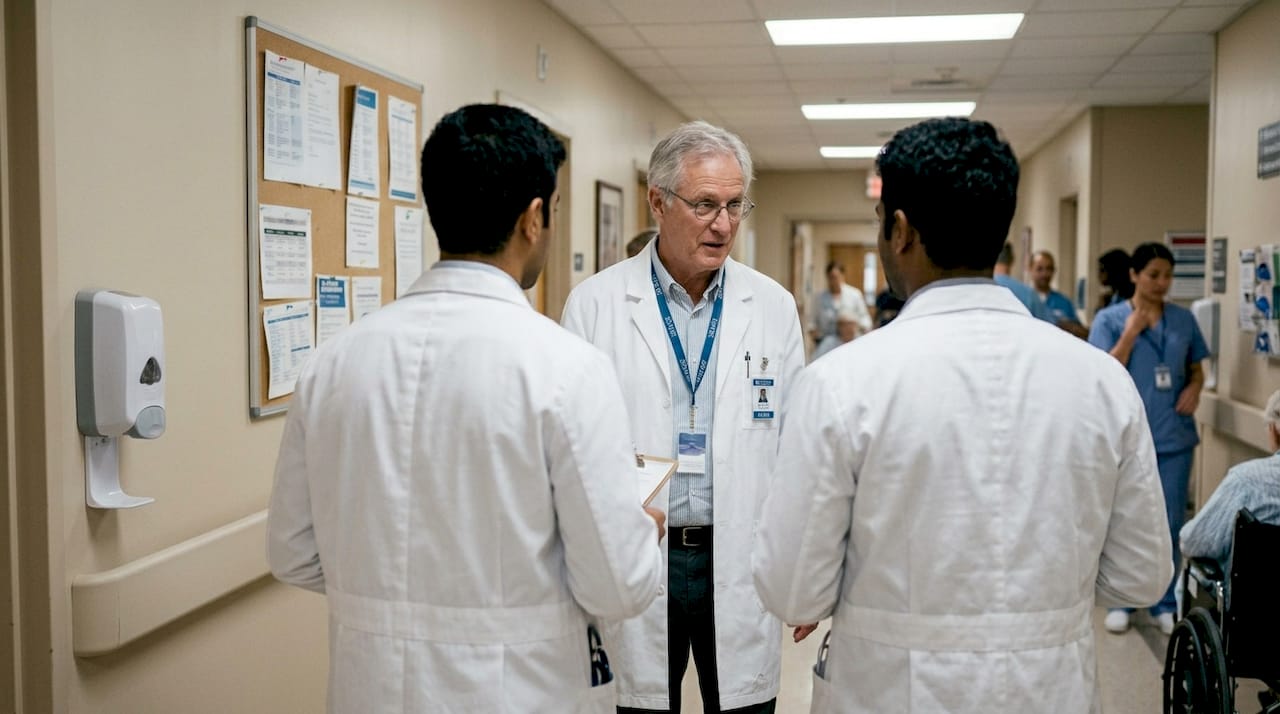
Career implications are real too. International medical graduates (IMGs) face additional scrutiny when applying for residencies, particularly in the US. Residency programs sometimes carry biases against foreign-trained physicians, regardless of the quality of their education. Stigma for IMGs is a documented challenge, and the best counter to it is exceptional academic performance and strong USMLE scores.
Here is a numbered breakdown of the key challenges to prepare for:
- Local language acquisition: Essential for clinical rotations and daily life
- Cultural adaptation: Different healthcare systems, patient communication norms, and academic cultures
- Residency competition: High USMLE or PLAB scores are non-negotiable for competitive programs
- Professional stigma: Some residency directors hold biases against IMGs that require proactive reputation-building
- Regulatory navigation: Licensing requirements differ by country, requiring careful planning years in advance
For a realistic look at residency competitiveness for English-taught graduates, it is worth researching match rates and speaking with alumni from your target programs before committing.
Pro Tip: Start learning the local language of your target country at least six months before your program begins. Even basic conversational skills signal commitment to faculty and patients, and they make your clinical years significantly less stressful.
Practical application: Choosing and succeeding in an English-taught medical program
Selecting the right program is not just about tuition or location. It is about fit, accreditation, and long-term career alignment. Here is a decision-making framework to guide your process.
| Criteria | What to check |
|---|---|
| Accreditation | WDOMS listing, national medical council recognition |
| Licensing pathway | USMLE eligibility, EU recognition, PLAB compatibility |
| Tuition and fees | Full program cost, not just year one |
| Clinical training quality | Hospital affiliations, rotation structure |
| Alumni outcomes | Residency match rates, licensing success stories |
| Language support | Local language courses offered by the university |
Commitment, preparation, and top performance are the three pillars of success in these programs. Students who treat their European medical degree as a stepping stone and invest accordingly tend to achieve strong outcomes.
Here is a step-by-step action plan for prospective students:
- Research accreditation first: Confirm WDOMS listing and check licensing board recognition in your target country for practice
- Shortlist programs by fit: Compare tuition, location, clinical structure, and alumni outcomes
- Prepare for entrance requirements: Some programs require biology and chemistry entrance exams; others use interviews
- Begin language study early: Enroll in a structured course for the local language of your chosen country
- Build your application strategically: Strong science grades, a clear personal statement, and relevant shadowing experience matter
- Plan your licensing pathway: Decide early whether you are targeting USMLE, PLAB, or EU licensing, since this affects your study strategy
Pro Tip: Request a virtual meeting with current students or alumni from any program you are seriously considering. No brochure tells you what daily life and clinical training actually feel like. Real student perspectives are your most reliable data point.
Next steps: Explore guidance through Vistara Abroad
Navigating European medical admissions on your own is possible, but it is slow, error-prone, and stressful. The accreditation landscape changes, entrance exam formats shift, and visa requirements vary by country. Getting one detail wrong can cost you an entire application cycle.
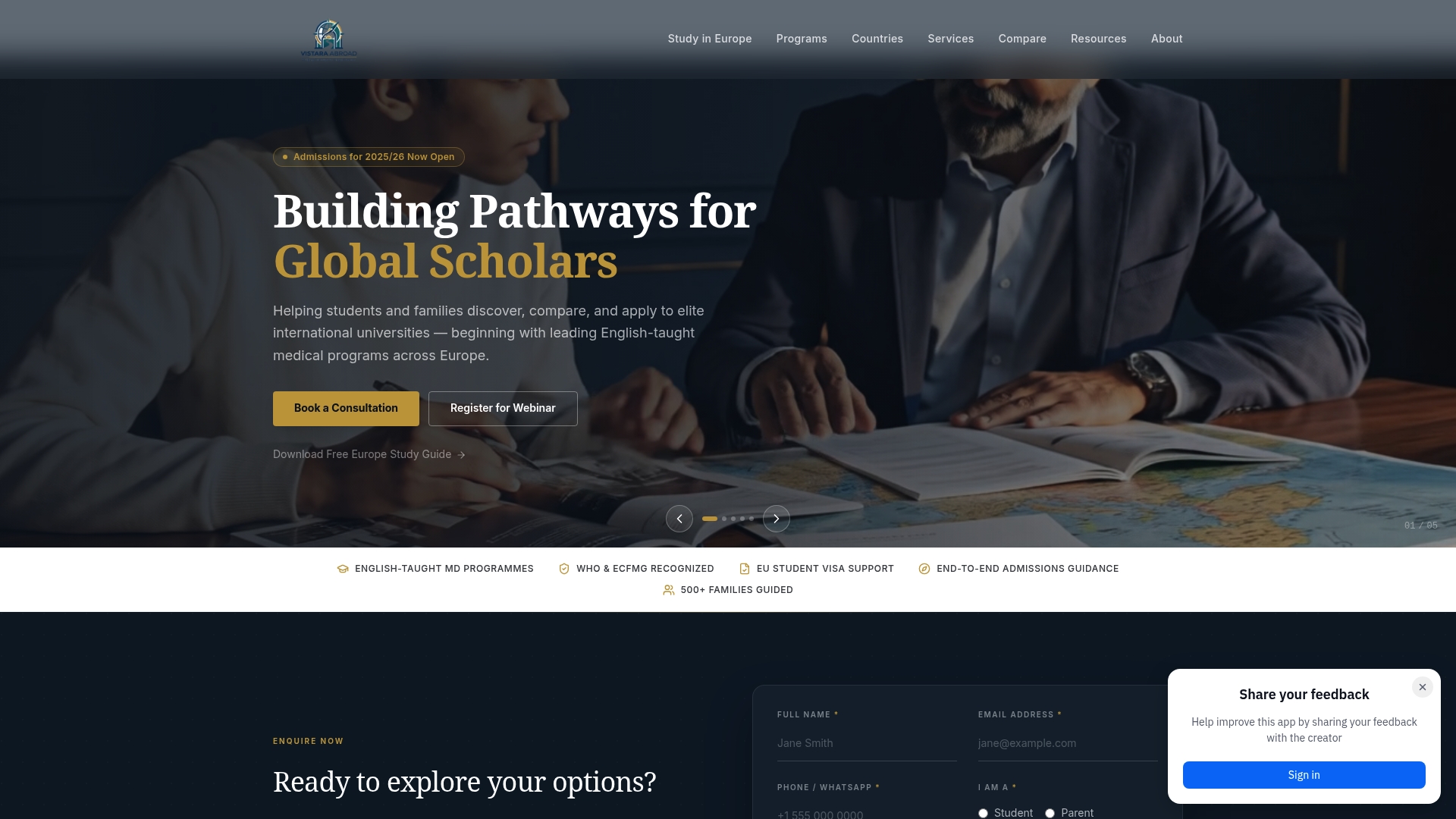
Vistara Abroad exists to remove that uncertainty. Through study abroad guidance built specifically for medical and health sciences applicants, the platform offers personalized university shortlisting, entrance exam preparation, application support, visa guidance, and pre-departure orientation. Whether you are just starting your research or ready to apply for 2025/26 intake, the team at Vistara Abroad can help you move forward with confidence. Free resources, webinars, and a detailed European study guide are available to get you oriented before you commit to anything.
Frequently asked questions
Are English-taught medical degrees in Europe recognized internationally?
Most English-taught medical degrees in Europe are fully accredited and recognized across the US, UK, and EU, but accredited pathways vary by country, so always verify recognition with the licensing body in your target practice location.
What language skills are needed for English-taught medical programs?
Strong English proficiency is required for coursework and exams, but local language adaptation is essential for clinical rotations and communicating with patients and hospital staff.
How competitive is getting a residency after an English-taught program?
Residency is highly competitive, and stigma for IMGs is a real factor, making top academic performance and strong licensing exam scores non-negotiable for matching into good programs.
Is studying medicine in English in Europe more affordable?
Yes. Many European English-taught programs offer affordable, globally recognized education at a fraction of US or UK tuition costs, with lower living expenses in most host cities as well.